


I had been on the new job for three weeks when I challenged the company’s founder and CEO.
I was an individual contributor.
This was “pre-kids” Mike, so my IDGAF muscle (which you’ll learn more about ahead) was in prime condition. Unfortunately, the rest of my life wasn’t.
I had moved my wife across the country for a job that was the wrong fit. My reputation as a rising star had just taken its third consecutive hit—and the gig I moved us to New Jersey for wasn’t even close to what I needed.
Oh, and we were broke.
So I joined this scaling startup as a Sales Recruiter, ready to make a difference. The company was fast-paced and future-thinking. My boss was amazing. It felt right.
Then in week three, the CEO made a mandate about recruiting. Something I knew would hurt us.
He had an open-door, “anybody can ping me about anything” policy. Or at least, he’d said he did in the all-hands I’d just watched.
So I did what any sensible new guy would do: I texted my wife to let her know I was about to challenge the CEO.
Then I did it—in a Slack channel with the CEO, HR, and the entire recruiting team watching.
Should I have been shit-canned? Maybe. I later saw others shown the door for less.
But I wanted to win. I thought the service had real potential. I believed that if we could get the right people in the door, we could build something special. And I knew his mandate would hurt our chances.
More than that, I was probably just fucking tired of losing.
Twenty minutes later, the CEO called. We had a good dialogue. I listened to his rationale. I shared my perspective.
Did I “win” that conversation?
No. He was the founder and CEO. I was the FNG who hadn’t even registered for benefits yet. I told him we’d do things his way and track the results.
But did that conversation help get us—and eventually me—closer to winning?
To quote Walter White: “You’re goddamn right.”
WINNING: THE UNFORGIVING RACE TO GREATNESS
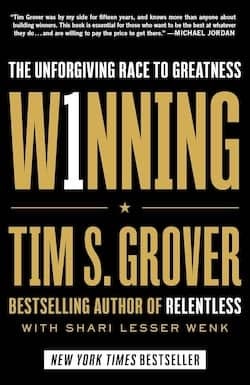
Author: Tim Grover
Published: May 18, 2021
Length: 240 pages
Buy it here: https://amzn.to/4lSEJ8j
WHY THIS BOOK MATTERS
Tim Grover trained Jordan, Kobe, and Wade—not just their bodies, but their minds. Winning is his response to everyone who read his first book, Relentless, and whined: “But it doesn’t tell me what to do!”
Grover’s response? “Why the hell would you want to be told what to do?”
This book isn’t for people who need instructions. It’s for people who already know what needs to happen but keep apologizing for knowing it. Who’ve been told their intensity is “too much” and their standards are “unrealistic.”
You know that voice that told me to challenge the CEO? The one that doesn’t give a fuck about timing or politics or playing it safe? Grover says that voice is your superpower. Not your problem.
Most books tell you to find balance. To be a team player. To consider everyone’s feelings.
This one tells you the truth: Winning doesn’t care about your work-life balance. It laughs at being well-rounded. And it doesn’t give a shit if people think you’re difficult.
Because while you’re in another meeting about having a meeting, someone with half your talent and twice your selfishness is taking your spot.
THE ESSENTIALS: 3 CORE IDEAS
1. The Four Rings That Separate Winners From Everyone Else
Picture a target with four rings. Most people think they’re in the center. Most people are lying to themselves.
Outer Ring: Talent. Everyone’s here. Your parents told you that you were special. So did everyone else’s. Congrats on having a pulse.
Second Ring: Intelligence. You figured out how to use what you’ve got. Better than the outer ring, but still crowded.
Third Ring: Competitiveness. You’ll fight for it. You understand nothing gets handed to you. But plenty of people talk about competing until it’s time to actually take something from someone else.
Center: Resilience. This is where winners live. You’ll keep fighting when you’re bleeding. When you’ve been blindsided. When everyone else would understand if you quit.
Resilience is the power to stay in the fight when your fear is telling you to run.
It’s not inspirational. It’s the NFL kicker who misses the game-winner and has to line up again next week. It’s flopping through three consecutive jobs and still showing up to challenge the CEO at job number four.
Without resilience, the other three rings are just hobbies you talk about at parties.
2. Selfishness Isn’t Wrong - It’s Strategy
Winning requires selfishness. Winners don’t care what you think.
Read that again. Let it piss you off. Then ask yourself why you’re mad.
Grover calls it your IDGAF (I Don’t Give A Fuck) muscle - that part of you that can make decisions without polling the room first. Most people let theirs atrophy. They need consensus. Permission. Approval.
The world will call you an asshole for protecting your time. For saying no without explaining. For ending conversations when they stop serving you.
Good. Let them.

“Selfish winners give to themselves so they can ultimately give to others. They give themselves confidence, courage, clarity. They give themselves time and space and focus.”
Grover’s “No List” isn’t some productivity hack. It’s a declaration of war against your own bullshit. Those projects you’ll “get to someday”? The favors you keep postponing? The coffee meetings with people you don’t even like?
“Either do them or admit you’re never doing them and move on. Managing that back burner is a ridiculous waste of time and energy.”
You can’t win if you’re managing everyone else’s feelings. You can’t lead if you’re constantly checking if it’s okay to lead. And you sure as hell can’t build anything meaningful if you’re apologizing for the space it takes up.
3. Your Dark Side Is The Fuel That Actually Matters
Let’s get specific about what your dark side actually is: the mental list you keep of everyone who said you couldn’t. The boss who passed you over. The ex who said you’d never amount to shit. The parent who loved you but never quite believed in you.
It’s 2 AM revenge fantasies where you show up to the high school reunion successful as fuck. Checking LinkedIn to see if that guy who got promoted over you is still stuck in middle management. That guilty, delicious satisfaction when someone who doubted you fails.
We’re taught this is petty. Unhealthy. That successful people “rise above” and “wish everyone well.”
Bullshit.
Stop lying to yourself about who you are and why you’re that way. That’s your fuel, not something to hide.
Jordan didn’t forget being cut from varsity. He used it. Kobe kept a running list of every perceived slight. They called it psychotic. He called it motivation.

Your dark side remembers everything. While your conscious mind tries to forgive and forget, your dark side converts pain into premium unleaded. It doesn’t need meditation apps or gratitude journals. It runs on the fumes of every time life kicked you in the teeth—and it’s huffing like Charlie Day huffing spray paint while singing Dayman.
The people who tell you to let it go? They’re not wrong—they’re just not trying to win like you are. They want peace. You want victory. Both are valid. Only one changes the world.
Here’s what becoming friends with your dark side looks like: You stop pretending you’re motivated by altruism when you’re really motivated by “fuck you.” You stop apologizing for keeping score. You stop feeling guilty for wanting to win so badly it hurts.
You shake hands with the monster in your closet and put it to work.
Because that monster will work longer hours than inspiration ever will. It’ll push harder than passion. It’ll endure more than purpose.
Your dark side isn’t your enemy. It’s your employee of the month. Every month. Forever.
THE ENDURANCE FACTOR
This book will outlast every life hack and morning routine because it’s not trying to fix you. It’s unleashing what you’ve been apologizing for.
In 20 years, people will still be pretending they want balance while secretly craving more. Still asking permission to be ambitious. Still waiting for the “right time” to stop playing nice.
Winning doesn’t age because the truth doesn’t age: Most people would rather be liked than be great.
The business books will keep coming. The frameworks will get prettier. But they’ll all dance around what Grover says directly: You already know what to do. You’re just scared of what it’ll cost.
That voice telling you to challenge your CEO three weeks into a new job? To come off mute when you’re low on the totem pole? To go against your boss because, fuck the politics, it’s necessary?
It’s the same voice that’ll be whispering to someone else in 2045. The details change. The technology evolves. But that moment when you choose between being reasonable and being right? That never changes.
This book endures because it’s giving you permission to trust the system you already have—the one everyone’s been telling you to ignore.
The one that wins.