

The text came on a Sunday afternoon, a week after we returned from the NICU with our third son.
“Can we talk this afternoon or first thing tomorrow morning? It’s important.”
I showed the text to Michelle. We both knew what “important” meant in corporate speak.
After eight days of holding a baby hooked up to tubes, sleeping in hospital chairs, and rooting for our son to reach milestones breathing on his own, we were about to get another kick in the teeth.
When I spoke to my boss after bedtime, the news was confirmed: another round of layoffs was coming, and this time, my number was up. It was a respectful conversation—and my boss took care of me on the way out—but after more than half a decade with the company, that was the unceremonious ending.
Three kids. New baby. Medical bills piling up. No job.
Five days later, Michelle received a similar message, with the same outcome.
The apocalypse doesn’t always announce itself with sirens and breaking news.
Sometimes it comes in a scheduled Zoom that HR joins. Twice in one week.
THE STAND: THE COMPLETE & UNCUT EDITION
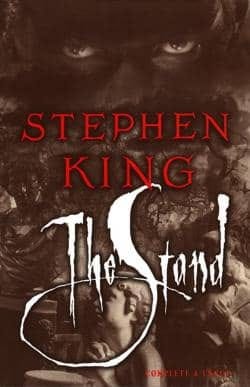
Author: Stephen King
Published: 1978 | “The Complete & Uncut Edition“ published May, 1 1990
Length: 1,152 pages
Buy: https://amzn.to/4ay5T0N
WHY THIS BOOK MATTERS
Stephen King’s The Stand isn’t really about the end of the world. It’s about what happens when your world ends and you’re still breathing.
When 99.4% of humanity gets wiped out by Captain Trips, the survivors don’t just rebuild civilization—they’re forced to rebuild themselves. No more hiding behind routines, obligations, or the comfortable numbness of modern life. The superflu strips away every excuse, every safety net, every story the characters have been telling yourself about why you they can’t change.
Here’s what King understood: We’re all waiting for permission to start our real lives. Waiting for the right moment, the perfect plan, the cosmic sign that says “now.” But for the survivors in The Stand, that moment comes wrapped in horror. The plague doesn’t give a shit about your five-year plan. Neither did my layoff.
Neither will yours, when it comes.
The question isn’t whether your first act will go up in flames.
It’s whether you’ll be the one holding the book of matches and can of gasoline.
THE ESSENTIALS: 3 CORE IDEAS
1. Your Second Act Is Coming Whether You Choose It Or Not
Every character who survives the plague gets thrust into a life they never asked for. Larry Underwood goes from emerging degenerate rock star to reluctant leader. Frannie Goldsmith transforms from pregnant college dropout to the mother of humanity’s future. Nick Andros evolves from deaf-mute drifter to spiritual guide. Stuart Redman shifts from calculator factory worker to the man everyone looks to for answers.
They didn’t volunteer for these roles. The world ended and suddenly they had to become who they were capable of being. no committee meetings. No strategic planning. Just the brutal clarity that comes when everything familiar burns away.
While Covid cut many stories short, most of us won’t face a pandemic that kills everyone we know. But life has other ways of ending our first act:
The layoff that blindsides you after years of loyalty
The diagnosis that rewrites every priority overnight
The divorce papers that torch your twenty-year plan
The 3am realization that you’ve been living someone els’s definition of success
The death that makes you question what the hell you’re doing with your time.
I could have treated my layoff like a temporary setback. Updated the resume, hit LinkedIn hard, found another corporate gig. Kept my head down and waited for life to make the next decision for me.
Instead, I saw it for what it was: my superflu moment. The universe forcing my hand. My old life was over whether I admitted it or not.
You can wait for the apocalypse to find you, or you can strike the match yourself while you still have agency. Your second act is coming either way. The only choice is whether you’ll write it or let it write you.
2. The Real Battle Isn’t Good vs. Evil—It’s Comfort vs. Purpose
Randall Flagg doesn’t win followers by being obviously evil. He doesn’t show up with horns and a pitchfork, cackling about damnation. He offers them exactly what they crave: order, purpose, and freedom from difficult choices. Follow me, he says, and I’ll tell you exactly what to do. No more uncertainty. No more struggling with right and wrong. Just surrender your agency and I’ll make the trains run on time.
Sound familiar?
We’ve built an entire civilization that runs on voluntary sedation. Infinite scroll to avoid our thoughts. Binge culture to escape our feelings. Outrage as entertainment to dodge our own disappointments. We mainline distraction like junkies because facing the truth is terrifying:
Most of us are living lives we never consciously chose.
We’re NPCs in our own story, following scripts written by dead strangers, measuring success by metrics we don’t even believe in.
Mother Abagail’s crew in Boulder has it harder. They have to build something from scratch, argue about every decision, face their own failures and limitations. They have to choose, every day, to do the difficult thing instead of the easy thing. They have to accept that building a life worth living means chaos, uncertainty, and the constant possibility of fucking it all up.
Flagg’s greatest trick isn’t the supernatural theatrics—it’s being exactly what people think they want. He doesn’t reveal himself as evil, not at first. He’s the voice that whispers: Stay comfortable. Let me think for you. Trade your soul for certainty. “My life for you.” I’ll take away the pain, the doubt, the terrible burden of having to decide who you are.
And like Lloyd Henried, the Trashcan Man, Harold Lauder, and Nadine Cross—like all of us who listen to that voice—by the time we realize we’ve been had, that the medicine was actually poison, it’s too late.
The comfortable path is always there, glowing like Vegas on the horizon. All you have to do is stop fighting. Stop questioning. Stop believing you were meant for something more.
3. Making Your Stand Means Accepting You Might Lose Everything
The leaders of the Boulder crew don’t walk to Vegas because they think they’ll win. They all doubt they’ll survive. They don’t have a brilliant strategy or secret weapon. They don’t even have a change of clothes.
They walk because not walking guarantees their death—and the death of everyone left in the Free Zone. They’d rather die on their feet than live on their knees. They’d rather fail spectacularly trying than cower in fear.
When Stu, Larry, Ralph, and Glen set out across the Rockies, they’re not heroes—they’re regular people who decided that some things matter more than survival. They leave behind safety, community, and the people they love because the alternative is letting darkness win by default. They make their stand not because victory is guaranteed, but because making it is what makes them human.
When you decide to torch your comfortable life and build something real, you’re making the same choice. You might fail in public. Your business might crater six months in. Your book might sell twelve copies, all to your mom. Your marriage might not survive the truth of who you’re becoming. The people who love your compliant version might hate who you become. You might have to sell the house, drive Uber at night, eat ramen like you’re 22 again.
Do it anyway.
For most of us, the real apocalypse isn’t viral or nuclear or supernatural. It’s waking up at 65 and realizing we lived someone else’s life. It’s dying with our real work still inside us. It’s choosing comfort over purpose so many times that we forget we ever had a choice. It’s becoming such an expert at swallowing our truth that we can’t remember what it tastes like.
The survivors in The Stand don’t get to keep their old lives. Neither do you, once you really see what’s possible. Once you feel that calling—whether it comes from a higher power or from somewhere deep inside—you can’t unfeel it. You can ignore it, medicate it, bury it under obligations and excuses and “when I have more time.” But it never really goes away. It just gets louder, angrier, more desperate.
Until one day it stops calling altogether.
And that silence is the most terrifying sound you’ll ever hear.
THE ENDURANCE FACTOR
The Stand endures because King wrote the ultimate second-act manual disguised as a horror epic. Every generation discovers it during their own moment of reckoning:
When the life they built stops fitting
When the compromises become unbearable
When they realize they’ve been sleepwalking through their own existence.
The book weighs in at 1,152 pages because transformation isn’t a weekend workshop. It’s not a motivational quote on Instagram or a TED talk about following your passion.
It’s a slog through hell.
It’s watching everything you knew burn down.
It’s walking through the desert with no guarantee of reaching the promised land.
It’s choosing the harder path even when the easier one is right there, glowing like Vegas on the horizon, promising you comfort in exchange for your soul.
Forty-six years after publication, we’re still reading about Larry and Stu and Frannie because we recognize ourselves in their forced rebirth.
We’re all survivors of our own personal apocalypses, standing in the wreckage, deciding what to build next. King knew that the real horror isn’t supernatural—it’s natural. It’s the slow death of potential. It’s the gradual surrender of everything that makes you unique. It’s the daily choice to be less than you are because being more seems too hard.
Stop waiting for your superflu moment. The apocalypse you need already happened—it was the moment you realized your life isn’t working.
The only question left:
Will you keep sleepwalking until time makes your choices for you, or will you make your stand?