


Three years after graduating, I had three different careers.
Most of my Villanova business school classmates had a cleaner story. Many of them hopped on I-95 and went up to NYC to slot into EY, PwC, Deloitte, or KPMG, making real money from paychecks from real companies.
My first paycheck’s logos were impressive as I started in sports marketing – NBA & NHL teams look good, that’s why they sell jerseys. But six months in, I was failing hard. The Sunday night ER trip for my first panic attack made it official – that wasn’t the play.
I followed that with the total anti-corporate move into a friends’ start-up. Those were a fun couple of years working with people I liked out of a 2-bedroom apartment on the Main Line outside of Philly. But I was flat-broke with no upward career mobility, and when I turned 25, I finally said, “Shit, I need to start making money.”
So, career three—a newly-minted Resource Development Manager at an IT staffing firm—needed to stick. And that’s when I first read Ayn Rand’s controversial book, The Fountainhead.
My problem hadn’t been bad career choices (though there were definitely a few that weren’t fully thought out). The problem was that I wasn’t taking personal accountability for anything happening in my life. I was jealous of my friends who looked confident, who seemed to have direction, who weren’t constantly second-guessing every decision. I craved external validation and was getting none of it.
For a kid who had been an honors student his whole life and graduated cum laude from a solid school, I felt like I had devolved into a meager, floundering fuck-up. I’d still be chest-out with my buddies at our annual fantasy football draft, but it was a defense mechanism. Inside, I felt like a fraud.
Turns out, this is the exact mindset of what Ayn Rand calls a “secondhander” – someone who doesn’t create for themselves but expects others to provide for them. Someone who looks outside for validation instead of building from within.
My brother’s college buddy Oz recommended The Fountainhead right as I was starting career number three. (Shout out to Tommy and Oz). The timing was perfect, though I didn’t know it yet.
Reading that book was devastating in the best possible way. Here was protagonist Howard Roark – everything I wanted to be. Maybe not the emotional detachment—I’m not all that upset that I tear up watching Pixar movies from time to time— but the self-knowledge. The confidence. The way he ran everything through his own filter before making any decision.
I was so far from that ideal, I didn’t know where to start. So I started with how I was interpreting my life.
I wasn’t a good-for-nothing fuck-up. I wasn’t a helpless victim of circumstance, either.
I just hadn’t learned the language of my internal voice.
THE FOUNTAINHEAD
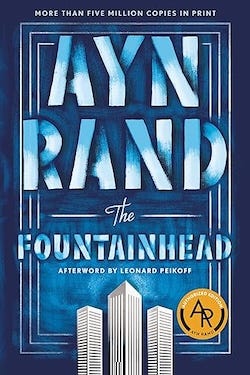
Author: Ayn Rand
Published: 1943
Length: 720 pages
Buy it here: https://amzn.to/48S9tDK
WHY THIS BOOK MATTERS
Today, I’m in what many call the lonely chapter. The weird middle where my future isn’t solidified, but I know it’ll look different from my past.
I’ve moved away from some people. I’m moving toward others – but I’m not invited to those conversations yet.
So you work with what you have. Podcasts, novels, people in your life who are a few miles down the path. Back when I needed him most, Roark became part of my advisory board. I still find myself seeking his counsel today.
If you’re investing your time in this Outlast Yourself series, you know the lonely chapter. Whether it’s behind you—something you made it through—or within sight, it’s going to be a part of your story. When you’re building something while still figuring out what that something is, it’s a mandatory stage.
The Fountainhead matters because Roark exemplifies staying true to your vision when you’re surrounded by people who think you should be doing something else. When the safe path seems smarter. When everyone’s telling you to compromise (just a little bit) to make your life easier.
Roark doesn’t bend. Ever. And the book shows you exactly what that costs – and what it’s worth.
THE ESSENTIALS: 3 CORE IDEAS
1. Run Everything Through Your Own Judgment First, No Matter The Cost
The most powerful scenes in the book aren’t Roark’s occasional triumphs. They’re his dark periods. The stretches when he was unemployed because he refused to compromise one iota of his architectural vision.
Roark would take any job to survive – working in a granite quarry, doing menial labor – but he wouldn’t connect his mind to work that violated his principles. Even when survival was on the line, he protected his core.
Pure Viktor Frankl energy: maintaining your essential self under pressure.
For six months after reading the book, I asked myself “What would a guy like Roark do?” in every situation. When things hurt – well, what of it? Push through. Don’t give yourself another option, because to do so would betray the essence of your soul.
To say “my soul” was tied up in an agency recruiting job would be a tad dramatic, but in another very real sense, I was redefining my identity.
I needed to become something else than what I was. Someone who:
set his own course and moved towards his own vision
kept the promises he made to himself
went all-in on something and become really, really fucking good at it.
So I built my filter and used the hell out of it.
Did I still get stuff wrong?
Fuck yes. All the time.
For all the books I read, I seem incapable of learning anything without picking up my own scars.
But in my mind, it was an entirely new experience.
Who got it wrong? ME. Not suboptimal circumstances, unlucky breaks, or being dealt a bad hand. The guy making the decisions was the one who fucked it up.
It was liberating. I wasn’t at anyone’s mercy. The only thing that drove me was my mind, and the only thing that limited me was my abilities. And I could develop them.
I quadrupled my earnings in a year.
Within 18 months, I went from being too broke for a night out every week to living in a cool Midtown apartment with a great view of the Houston skyline. I bought my dream guitar – a PRS Custom 24 in Sapphire Smokeburst. (Clearly, I did not take on Roark’s frugal approach).
And that borrowed Roark filter? It’s now my filter – modified, customized, tailored.
It was functional in 2010. It is lethal today.
2. Being Selfish and Self-Directed is One of the Best Things You Can Do in This Life
Watch Roark in flow state and you’ll see something beautiful – a violent shift from aloofness to lethal with a pencil in his hand. A direct channel to Source, moving with confidence, speed, and precision that is the closest encounter creators have with the divine.
Compare that to Peter Keating’s hollow accomplishments that left him completely empty. Keating spent his whole life trying to become what other people wanted him to be. He succeeded by every external measure – money, status, recognition – and ended up with nothing.
Because secondhanders like Keating always flame out. If you can’t create original ideas, you’re destined for a life serving others or a life vacant and devoid of meaning.
I had plenty of Peter Keating in me when I read this book. Insecurity. Looking for external approval and validation. Terrified to find out who I actually was – because what if that person wasn’t good enough? Could I handle that realization?
The book made it easy to see what I wanted to run toward (Roark’s self-mastery, control, discipline, conviction) and what I wanted to run from (Keating’s emptiness).

Rand’s virtue of selfishness (a consistent theme in her work that first emerges in The Fountainhead) isn’t about stepping on others. It’s about taking full responsibility for your own fulfillment instead of expecting the world to provide it for you. Becoming useful instead of staying a dependent.
When you know who you are and what you’re building, you create more value for everyone around you. Self-direction isn’t selfish – it’s how you become most useful.
3. The World’s Continuous War is Between Those Who Know Themselves and Those Who Don’t.
Every field has its archetypes, and they’re all represented in this book:
Henry Cameron – The OG renegade who only listened to himself.
Howard Roark – The torch carrier who builds on the foundation.
Peter Keating – The secondhander who copies without understanding.
Ellsworth Toohey – The manipulator who controls through influence.
Toohey is the most dangerous because he’s a quiet, subtle Hitler who moves others around the chessboard. He doesn’t want to control the output of prime movers – he wants to control the men themselves. Titans of industry by proxy.
What Rand nailed: these guys always start small and unassuming. You don’t take them seriously until they’ve eaten through the foundation, put their people in key positions, and set themselves up for control.
Men like Toohey are primeval. They marginalize excellence and celebrate mediocrity. The more vanilla the world gets, the more we all suffer.
Always be watchful for the Tooheys in your life. They’ll disguise their control as collaboration. They manipulate via mentorship. They orchestrate the social tides, making you think you need them to succeed.
The inverse is more important: align yourself with the Roarks and Camerons of the world. The men and women who stand on their own two feet in the arena, face reality, and will die before compromising who they are. One or two of those in your life are rocket fuel for your journey (actual humans are better than fictional replicas in this case).
The war isn’t about success versus failure. It’s about authenticity versus conformity. And it will outlast us all.
THE ENDURANCE FACTOR
These character types exist in every era, every field. The renegade who breaks new ground. The successor who carries the vision forward. The follower who copies without understanding. The manipulator who controls through influence.
Rand didn’t create these archetypes – she didn’t need to. She just needed to personify them, and did an excellent job driving each archetype to their inevitable conclusion.
That’s why the book feels as relevant today as it did in 1943.
The names change (good luck finding an Ellsworth in the wild), but the dynamics don’t.
The book builds skills that compound over time:
Recognizing your authentic voice versus borrowed opinions
Developing internal standards that don’t require external validation
Identifying the difference between influence and manipulation
Building something that can only come from you
In ten years, the specific tactics for building your career will be different. The technology will be different. The opportunities will be different.
But you’ll still have to choose between authenticity and conformity.
You’ll still need to decide if it’s prudent to dilute yourself.
You’ll still shoulder the sacrifices that come along with your chosen path.
Authenticity is expensive.
Staying true to yourself means carrying weight.
“Conscious do cost,” as Butchie tells Omar in The Wire.
It’s up to you to decide if you’re willing to pay the price required to be yourself.
KEY QUOTES
I came here to say that I do not recognize anyone’s right to one minute of my life.
I don’t build in order to have clients. I have clients in order to build.
The question isn’t who is going to let me; it’s who is going to stop me.
The creator’s concern is the conquest of nature. The parasite’s concern is the conquest of men.
To say ‘I love you’ one must first know how to say the ‘I’.
The man who lets a leader prescribe his course is a wreck being towed to the scrap heap.
Who’s in your circle of fictional allies? What character keeps you grounded when the path gets unclear? Hit reply and tell me about the voice that guides you through your own lonely chapters.
I read every single response. Because we’re all figuring this out together, and sometimes the best advice comes from someone a few steps ahead on the same path.
If someone forwarded this to you and it landed, you can sign up at outlastyourself.net. They drop (most) Thursdays, with the caveat that I’m a working dad with 3 kids under 5 who’s on a plane every month. Sometimes, life gets in the way.
You can also check out the whole archive of The 52 Books That Will Outlast You on my blog.
Next week, we’ll hit that cool creative book that I mentioned last week. Another fellow Austinite represented by the 52 (not like I’m biased or anything).
Until then – keep building, keep growing, and keep going.