

THE DAY OF OUR ALBUM RELEASE ENDED WITH FEWER THAN 50 STREAMS OF OUR SONGS.
For three years, my brother Tommy and I self-recorded a rock album.
It took a long time for two major reasons: we both had full-time jobs, and we lived across the country from each other.
So it was a passion project. Nights, weekends, and any other spare time I could afford was spent on “the music.” Writing lyrics and melodies, recording guitar parts, screaming into a condenser mic in a New Jersey basement.
We did the whole thing as a team of two, which meant figuring ourselves out as songwriters while also learning sound engineering, mixing, mastering.
It was a very fun, DIY punk rock kind of attitude. A ton of my favorite artists started with self-recorded EP’s or short albums. It felt cool to be walking down the same path as theirs. We were making something to share with the world.
And for the most part, everything worked:
We have an album out in the world.
Four years later, I still like the songs (even if though I hear plenty of opportunities for re-do’s).
My kids will always have an album their dad and uncle rocked out on.
This, my friends, is what we call a moral victory.
Because, in reality, the album release was a complete flop.
It took me awhile to figure out where we made our mistakes, but over time, one screw-up loomed largest:
Other than telling some friends, nobody knew we were recording an album.
We didn’t build an audience. We didn’t leak songs to social media. I didn’t take videos of myself doing the work because I was writhing with imposter syndrome and self-doubt.
What if nobody likes the music?
What if people hate my voice?
What, I’m just supposed to just put a tripod here in the basement and film myself playing guitar like an asshole?
So we didn’t do it. We booted up a few socials, we shared some posts before the singles released, we dropped a couple of singles over a few months, and pushed our debut for a week.
Release day came. I stayed up until midnight to see it on Spotify and listened to the songs I was sick of hearing until two in the morning. So did Tommy.
Other than that, nobody else really gave a shit.
We had kind-hearted friends give it a listen. Some buddies bought CD’s or digital downloads. My team actually streamed one of the songs when I came onto a meeting, which was a really cool moment (good lookin out, Hoose).
But we had failed to properly develop an audience. Nobody cared about us because we hadn’t found people who liked us enough to care.
Because we didn’t show our work.
And so when I found Austin Kleon’s Show Your Work! and read it a year after our release, I wanted to throw it against a fucking wall.
Here’s the manual I needed during the pandemic.
SHOW YOUR WORK!
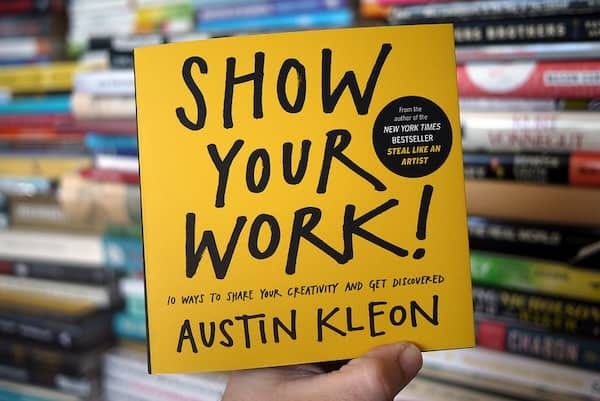
Author: Austin Kleon
Published: March 6, 2014
Length: 224 pages
Buy it Here: https://amzn.to/49PITvg
WHY THIS BOOK MATTERS
Austin Kleon has always seemed to me like the exact kind of person I’d hope to meet in Austin, Texas. He’s got a cool, laid back vibe. He’s messy. He cares deeply about his craft and takes chances with it. He’s kinda brilliant – and would probably hate being referred to as such.
I respect his work – not only because it exists, but because I know about it. And I know about it because he put his money where his mouth was.
He showed every step of his process as he built his blog’s audience and started cranking out straightforward, high-octane books on creativity.
I found him via “Steal Like An Artist” when I was trying to figure out how to write songs. His ideas directly contributed to me figuring out my voice and style. He gave me permission not to know it all – but borrow from enough of YOUR greats and mix and mash their ideas, and you end up finding something that works. Then you refine the thing that works ’til it’s yours.

See? Fucking brilliant.
The ironic thing about this whole album release snafu was that I knew the book existed – it came out in ’14. The information was there for me. But I think a part of me was afraid of what was in the pages. It was something that was going to demand massive vulnerability.
I needed to do it to be successful. But, in the moment of truth, I blinked. I gave in to my inner bitch who let me stay in my comfortable shell – and watched my album rack up a whopping 250 streams in its first month.
You know what that feels like? Three years of my life poured into this project. Strained my marriage, spent less time with my son, overextended myself. All for moral victories, sunk costs, and expensive lessons.
It feels the way Brady feels losing not one, but two Super Bowls to Eli.
So why is this book essential? It saves you from the biggest mistake I made in my creator journey.
One I’m not making as I build the 2nd Act Protocol (a minor plug to come at the end).
THE ESSENTIALS: 3 CORE IDEAS
Ok, those first two sections were a bit longer than usual, but they were fun stories to tell. I’ll jump in and out of these ideas with more efficiency.
Kleon makes it possible because his writing is undeniable. You just read the shit and go, “Yeah, that’s totally right.”
1. Learn in Public (and Share Your Process Daily)
Documenting making a rock album wouldn’t have been hard. In fact, it probably would have been cool. I would have met other musicians, connected with other artists, and created some genuine fans.
I regret not doing it for other reasons, too.
I would have liked to see myself in the late nights, the moments I nail a solo or get the mix dialed in perfectly.
I would have liked to watch myself botch 24 takes…and nail the 25th. (This was me a lot in the vocal booth).
I was smart enough to capture the moment when I opened the box of our CDs, but I didn’t share it with anyone.
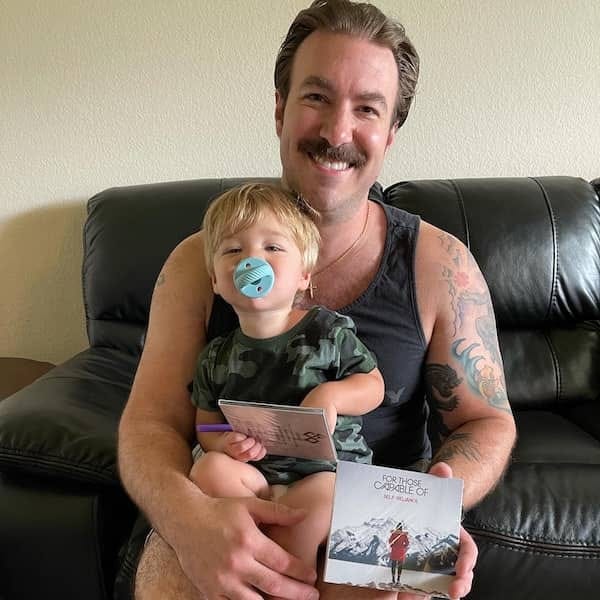
I had the wrong frame. In typical Mike fashion, I made it all about me. “What will people think about me?”
I wish I had shifted my frame to look at it from a more productive angle: the impact my sharing could have had on others.
“Would my making mistakes and sharing what I’m learning help other people making music on their own?”
Yes. 100%. I love learning from people somewhere near me on the path telling me something that tripped them up. My days as a 2nd Act Builder with a family and a full-time gig are all rolled ankles, bruised arms, shoulder and lower back pain. I’m trying to miss a punch or two instead of leaning into every one.
Tim Cook can’t teach me a damn thing about ducking and weaving.
But another dad trying to build a side business while still being Dad who still has a day job and has a more profitable side hustle? That guy has something to teach me. A bunch of somethings, probably. I’d follow him in a heartbeat.
Kleon shares great, easy advice. “Become a documentarian of what you do.” Share one small piece daily.
Put yourself out there. Literally, as I’m writing this, a visiting neighbor poked her head in my door and said, “I love your LinkedIn posts, I read every one. I don’t like them all so people don’t think I’m obsessed with this guy, but keep going!”
You never know who you’re helping.
2. “Scenius” Over Genius (Nobody Does it Alone)
So how do you find those people who will connect with what you’re doing?
Everybody thinks they need to “go get followers” to build an audience.
Musician Brian Eno looks at creativity differently – that great work comes from scenes, not lone geniuses. The “scenius” model suggests that great ideas come from groups of creative individuals, “A whole scene of people who were supporting each other, looking at each other’s work, copying from each other, stealing ideas, and contributing ideas.”
The nice part about the internet? It’s a massive scenius with no geographic limitations.
Which makes finding your little scenius in the bigger scene as simple as sharing your work.
“Make stuff you love and talk about stuff you love and you’ll attract people who love that kind of stuff.”
It’s not cold networking through cringe DMs – it’s pinging someone whose work moved you and telling them, “Hey, this thing you made landed with me” and linking to their thing.
This is how this newsletter came about. I had no authority on books, other than I like to read them and try to extract value out of what I ingest. I have thoughts and opinions about them. I try to leverage their wisdom in my day-to-day.
So, unlike my rock album, I just started talking about this stuff in public.
Leadership. Parenting. Trying to get better. Listening to my inner voice to chase a new calling. A bunch of fantastic books have helped me with all of that. So I talk about them now.
Slowly but surely, the right people have been showing up. Readers. Writers. Parents building something.
And that’s how I’ve waded into a cool little scenius of like-minded folks who I’d definitely have a beer with.
3. You’re Already Naked (So Stop Hiding)
The more I started sharing online, the more I began to realize a common theme:
Good ideas got some traction.
Personal stories got more eyeballs.
But the visceral stuff? The topics that made me hover over the “schedule post” button for a long time?
Those end up being what really connects me with people.
Steve Jobs said it best: “Remembering that you are going to die is the best way I know to avoid the trap of thinking you have something to lose. You’re already naked.”
When you’re building your first act, as Alex Hormozi puts it, you have “unlimited shots on goal.” You’re unknown. Who cares if you screw up? You’re just another anonymous voice in a sea of them.
But building a second act is different. You have status, reputation, something you’re scared of losing. And building something new – in public, no less – is admitting you don’t know everything. Which is admitting vulnerability.
There’s really only one question: hide that vulnerability, or share it?
How you answer that determines how quickly you connect with others.
People watching me fail in real-time (instead of building a rock album in a lab for 3 years and failing in one moment) has taught me something really valuable: nobody cares if you stumble.
Because everybody stumbles. We all trip up and fall down and run into things. It’s the reason the videos of people getting hurt – the ones I share with my wife and watch her laugh until she’s crying – have millions of views. We like seeing humans do human stuff. And humanity is inherently uncoordinated. Our life is all trial and error. So stop wasting energy protecting yourself and start spending it on creating.
And when someone does criticize you? Well, what of it? Channel some of David Goggins’ timeless wisdom: “You will never in life meet a hater doing better than you.”
Put out lots of work, let people take shots, and make more work. Kleon has the truth of it: “The more criticism you take, the more you realize it can’t hurt you.”
Stop treating your work like it’s precious. Treat it like practice.
Share more, learn faster, get feedback, and find your people sooner.
THE ENDURANCE FACTOR
Platforms are gonna change. TikTok might be dead in five years (or banned in America in a few months). LinkedIn might become something different altogether. Who knows.
Learn from my album release flop – the visibility you need comes from consistent sharing, not one big launch.
“The people who get what they’re after are very often the ones who just stick around long enough.”
The skills that help you stick around are skills that compound: documenting daily, sharing generously, learning in public, and building relationships with people who are near you on the path.
F. Scott Fitzgerald said “There are no second acts in American life,” but Kleon calls bullshit on this. “If you look around you’ll notice that there are not only second acts, there are third, fourth, and even fifth ones.”
For those of us building our second act (or third, or fourth), we can’t wait for gatekeepers. We can’t afford to tinker until our thing is “perfect.” We need allies and opportunity to build momentum. And we need them now.
If you’re building something that might outlast you, people need to know it exists. You need people to care about it. You also need people to help you make it better.
This book teaches you how.