


I HATE WHEN I DON’T CONTROL THINGS.
That’s when I’m at my most frustrated:
When people at work make idiotic, unhinged choices.
When my kids won’t stay in bed and it’s well past 10.
When someone in my life clearly needs a shove—and stays stuck.
It’s stress I pick up and carry like I’ve got room for it. Like I’m so emotionally solvent I can afford the extra weight.
And it’s ridiculous—because I can’t do a damn thing about any of it.
At least, that’s my default wiring. But I’ve done the reading. Marcus Aurelius. Viktor Frankl. And now—somewhat unexpectedly—Mel Robbins.

I knew Mel vaguely from YouTube clips. Then she spoke at LinkedIn Talent Connect in Phoenix, introduced me to the “5-4-3-2-1 method,” and just like that, I started using it every day to get into my cold plunge. Getting a useful tool out of an hour-long talk put her firmly on my radar.
Then this book showed up—right when I needed it. And Mel’s exactly what you’d expect: energetic, direct, research-backed, and not afraid to drop an f-bomb when it counts.
I started listening to Let Them on an afternoon walk. Within forty-five minutes, I was all in.
Turns out, Marcus, Viktor, and Mel all agree:
You can’t control your external world. But you can control your response to it. You choose how you interpret things—how you think, how you feel, how you examine the thoughts that flood your mind.
And yet, for whatever reason, most of us never activate that feature.
Which is how I end up swearing at traffic. Poking loved ones under the guise of “motivation.” Seething over decisions I can’t influence, multiple layers above my head.
Then one day, in a meeting, venting to a trusted colleague, she says: “You need to read Let Them.”
And I did. And I was floored.
I’ve never had something land so simply, powerfully, and immediately.
No, it doesn’t fix everything—nothing does. But it’s always available. Always in reach.
That’s the power, as Mel puts it, of just two words:
“Let them.”
⸻
LET THEM: A LIFE-CHANGING TOOL THAT MILLIONS OF PEOPLE CAN’T STOP TALKING ABOUT
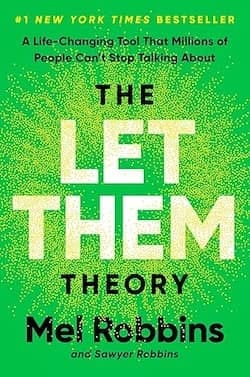
Author: Mel Robbins
Published: May 7, 2024
Length: 288 pages
Buy: https://amzn.to/4tVq81p
⸻
WHY THIS BOOK MATTERS
Most people spend their life managing other people’s chaos.
They try to fix their partner’s mindset. Soften a parent’s disapproval. Convert friends into cheerleaders. Convince colleagues to care. And underneath it all—an exhausting illusion: That if you just say it right, do it right, or sacrifice enough, they’ll finally change.
Mel Robbins offers a hard stop:
Let them.
Let them disagree. Let them misjudge you. Let them stay stuck.
You can’t control them. You can only control you.
This book is a guide for reclaiming your energy, your focus, and your emotional clarity by letting go of everything outside your control. That means other people. That means their reactions. That means the outcome.
Radical peace doesn’t come from getting them to change. It comes from getting yourself back.
THE FOUNDATION
The core of this book is a single truth:
You don’t control people. You control your response to people.
That one shift—away from managing others and toward managing yourself—frees up everything.
Robbins breaks it down with clear, practical frameworks, but it all circles back to this:
You don’t control their timeline for growth.
You don’t control their reactions.
You don’t control whether they get it, change, or see you.
But you do control how you show up. You control your standards, your boundaries, your energy. You control how long you stay in a room where you’re constantly shrinking.
And when influence is necessary, Robbins offers a calm, strategic tool: The ABC Loop.
A – Apologize and Ask: Acknowledge your role in the nagging, the repeated asks. Ask open-ended questions to foster trust.
B – Back Off and Observe: Give space. No nudging. No pushing. Let time and pattern reveal the truth.
C – Celebrate and Model: Celebrate the smallest progress. Do your part to model the behavior you’d love to see.
It’s not about fixing. It’s about influence without force—and influence starts with you.
THE ESSENTIALS
It’s a lengthy book, and different things are going to hit you at different stages of your life. This is what still landed with me on the second read:
Stop wasting your life on what you can’t control. Your energy is a finite resource, and when you spend it trying to change other people, you bankrupt yourself. The only sustainable power you have is in how you respond, not how you contort. Everything you want—peace, clarity, confidence—starts the moment you stop chasing external control.
Let them… and let yourself. This phrase doesn’t just release others—it liberates you. When you stop holding the emotional bag for everyone else, you can finally move forward on your own terms. Let them stay stuck, and let yourself move on.
Let them stress you out. People will project, offload, and emotionally dump—it’s human. You’re not going to be able to stop them. But stress is not a free pass to harm others, and Robbins gives you the language to draw the line: “I’m sorry for what your stress has done to you, but I need you to apologize for what your stress has done to me.” Oof. That hits hard.
Let them think bad thoughts about you. You can waste your life trying to rewrite someone’s perception—or you can focus on living aligned with who you really are. We waste energy trying to manipulate how others see us. That’s impossible. We have no control over another person. As David Foster Wallace put it, “You’ll stop worrying what others think about you when you realize how seldom they do.”
When grown-ups throw tantrums. Immaturity doesn’t end at adulthood—it just evolves into louder blame. You don’t have to match their reactivity, take the bait, or explain your position for the tenth time. Sometimes, the most powerful move is silence, distance, or simply walking away.
Make comparison your teacher. Comparison isn’t always poison—sometimes it’s a mirror. When envy hits, Robbins suggests asking: “What are they doing that I wish I were brave enough to try?” Used wisely, comparison becomes a guidepost, not a gut-punch.
69% of relationship problems are unresolvable. You won’t fix everything—and that’s not a failure, it’s a fact. The key is managing how you respond to the unresolvable, not constantly trying to overhaul your partner. Peace comes from choosing acceptance over perfection.
The 80/20 relationship rule. If your partner brings you 80% of what you deeply value, don’t torch it over the missing 20%. No one is going to be your everything—and trying to force it only breeds resentment. Mature love is learning to cherish what’s present, not chasing what’s missing.
The more you rescue, the more they sink. Constant rescuing sends one loud message: “I don’t trust you to handle this.” That’s not compassion—it’s control dressed up as help. Support means letting others rise on their own legs, not carrying them across the finish line.
How to support without fixing. Support isn’t advice, solutions, or steering—it’s presence. Robbins reframes help as witnessing someone’s struggle, not trying to erase it or pay for it to go away. Standing beside someone, without trying to direct their every step, is one of the most powerful gifts you can give.
Let them show you who they are. When you give someone the space to reveal themselves, they usually do. Don’t force relationships, partnerships, or conversations. Just watch how people behave. They’re telling you everything you need to know by the way they live. Your job is to stop justifying their actions and believe the truth in front of you.
THE ENDURANCE FACTOR
This book will last because the principle behind it is timeless: You can’t change other people. You can only decide who you become around them.
That’s what makes Let Them a survival tool. It doesn’t just help you cope with toxic patterns—it helps you unhook from them entirely.
Robbins hands you the clearest permission slip of all: To stop trying to be liked, validated, or understood by people unwilling to meet you where you are.
You don’t need to withdraw from the world. You just need to withdraw from the parts of it that pull you away from your integrity.
KEY QUOTES
“Let them judge you. Let them misunderstand you. Let them gossip about you. Their opinions aren’t your responsibility.”
Trying to fix their narrative keeps you stuck in a role you didn’t choose. Let them say what they will—your clarity is louder than their confusion.
“The only thing you control is how long you keep explaining yourself to people who’ve already decided not to hear you.”
Science says that if you’re trying to push someone in a direction they don’t want to go, their brain is automatically tuning you out. Every unnecessary explanation is an energy leak.
“Your peace begins the moment you stop managing other people’s expectations.”
Peace isn’t found in their approval—it’s built in your boundaries. The moment you stop curating yourself for others, you reclaim your life.
“You’re not responsible for healing someone who refuses to do the work.”
Help only works when it’s met with effort. Love them, support them, but don’t bleed for their refusal to grow.
“The more you rescue someone, the more you communicate that you don’t believe they can do it.”
What feels like support can become sabotage if it strips them of agency. If you want them to rise, step back.
THE LEGACY TEST
What will Let Them leave behind?
A blueprint for emotional adulthood.
The book doesn’t just teach you to draw boundaries—it gives you the language, the permission, and the calm clarity to enforce them.
It reminds you:
You don’t need their apology to move forward.
You don’t need their validation to stand firm.
You don’t need their transformation to begin yours.
You don’t control them. You only control you. And that’s more than enough.