


I CAN TRACE EVERY MAJOR PROBLEM IN MY MARRIAGE TO AN INTERPERSONAL CONFLICT.
I can trace every major problem in my career to an interpersonal conflict.
I can trace every major problem in my family to an interpersonal conflict.
I can trace every major problem in my friendships—get the point? One that might hit a little close to home?
It’s not because I’m an idiot (usually).
I know how to communicate effectively with people. I have plenty of high-functioning relationships, many times with the very people involved in the conflict.
It’s because I’m reacting.
I’m letting emotions win.
In the moment, I’m caring more about being “right” than I am about getting what I want.
Incredibly stupid when you think about it. Is there anything more self-defeating than undermining your own efforts to get what you want?
The good news for me is that I’m not alone. Modern life makes it pretty clear that I’m not the only person suffering from the “I got in an argument instead of getting what I wanted” malady.
The better news for all of us is that someone wrote a highly effective book on this very topic 88 years ago.
For all of the wisdom packed into Dale Carnegie’s How To Win Friends and Influence People, you’d be forgiven for thinking it was published in 2025. The principles it extols align with everything we now know about human psychology.
I ignored this book for one of those decades for the most ridiculous reason—the title.
“I don’t need a book to help me make friends or influence.”
In truth, I didn’t.
Just like Tiger Woods didn’t need Butch Harmon to break 90 at the local country club.
Amateurs don’t need to study the fundamentals.
Professionals do. So do husbands who want a happy marriage, employees who want to excel, and managers who want to lead.
Everything in life depends on the relationships we build—and the influence we hold within them.
This book helps you turn pro in the field of human connection.
A word of warning before we dive in—go easy on yourself.
It’s easy to read this book and think, “Wow, of COURSE, I should admit my own mistakes before pointing out theirs. God, that last fight with Kelsie, if I’d have just…”
Give yourself a break.
It’s why the work is so damn good—there’s not a single principle you’ll read today, 88 years later, that doesn’t feel innately correct.
No matter how many times it results in a palm to the head, you’ll be glad you read it.
HOW TO WIN FRIENDS & INFLUENCE PEOPLE
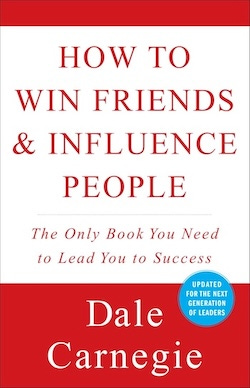
Author: Dale Carnegie
Published: October 1936
Length: 291 pages
WHY THIS BOOK MATTERS
People skills aren’t soft. They’re survival.
If you can’t navigate egos, de-escalate tension, or spark loyalty—don’t be surprised when you lose opportunities to someone who can.
Most professionals aren’t derailed by lack of intelligence or technical skill. They’re undone by poor relationships, unearned resentment, and the subtle ways they alienate others without realizing it.
Carnegie wrote this book in the 1930s, but the truths are timeless.
Because influence doesn’t expire—it either compounds or corrodes.
THE FOUNDATION
At its core, How to Win Friends and Influence People isn’t a charm manual. It’s a blueprint for navigating human nature.
Carnegie doesn’t preach manipulation—he exposes patterns:
People crave appreciation.
They resist criticism.
They remember how you made them feel far longer than what you said.
This book is a roadmap for anyone who wants to create deeper loyalty, smoother collaboration, and stronger influence in any room they walk into.
It also holds a mirror up to the reader:
Are you earning the reactions you’re getting? Or are you justifying bad outcomes by blaming others?
THE ESSENTIALS
Carnegie’s brilliance isn’t complexity. It’s clarity. He saw through layers of behavior to the emotional wiring underneath.
Start with the fundamentals. To quote Bunk Moreland, “Aw yeah. That golden rule.”
Don’t criticize, condemn, or complain. Why? Because criticism doesn’t change people—it makes them defend themselves. Ego is a fragile structure. Attack it, and you trigger walls. But speak to someone’s self-image, affirm what they value, and they’ll follow you anywhere.
Next, become someone others want to be around:
Show genuine interest. People open up when they feel seen. Ask about what matters to them—not to be polite, but because you actually care.
Smile. A warm, authentic smile disarms tension and signals safety. It’s the fastest way to communicate openness without saying a word.
Remember names. A person’s name is the most important sound in any language to them. Using it builds connection and respect instantly.
Listen more than you talk. Let others share their stories. They’ll walk away thinking you’re brilliant—because you gave them space to feel heard.
These aren’t gimmicks—they’re trust accelerants. Small actions that signal, “You matter.” In a world of self-absorption, that’s rare currency.

Then comes the harder part: influencing thought. Carnegie walks through how to guide people without force.
Let the other person feel the idea is theirs. People defend what they create. If you plant the seed and let them take ownership, you get alignment without resistance.
Start with shared goals. Agreement builds momentum. Begin on common ground, and the path forward feels like collaboration—not correction.
Ask questions instead of dictating answers. When people discover the answer themselves, they don’t resist it—they believe in it. Questions invite ownership, not obedience.
Admit your own mistakes before pointing out theirs. Humility clears the air. When you lead with vulnerability, you lower defenses and open the door for honest change.
You don’t build buy-in with logic alone—you build it through respect, pacing, and psychological safety.
Finally, if you’re leading others—especially when change or correction is needed—Carnegie flips the script.
Lead with praise. Start with what’s working. It builds trust and makes people more open to hearing what needs to change.
Give people a reputation to live up to. People rise—or fall—to meet the identity you reflect back at them. Frame them as capable, and they’ll work to prove you right.
Make faults seem easy to fix. Most people freeze when a problem feels overwhelming. Show them it’s doable, and they’ll start moving before doubt sets in.
The goal isn’t control. The goal is commitment. If you’ve ever tried to manage without this mindset, you know how fast it backfires.
This book doesn’t offer tactics for short-term wins. It teaches a philosophy of influence—one rooted in empathy, restraint, and emotional intelligence.
And the hard truth? Most people won’t do it.
They’ll keep choosing speed over depth, control over connection, and wonder why they stall.
THE ENDURANCE FACTOR
This book has sold over 30 million copies. Not because it tells people what they want to hear—but because it tells them what they need to practice.
It holds up because human nature hasn’t changed.
People still want to feel seen. Still hate being criticized. Still follow those who understand them better than they understand themselves.
What Carnegie built wasn’t a personal development fad. He built a training manual for human connection that still runs through leadership academies, sales playbooks, customer service frameworks, and even conflict resolution protocols nearly a century later.
The real reason it endures? It forces you to ask better questions:
Am I making this about me or about them?
Do I want to be right—or effective?
Am I helping people rise—or shutting them down to feel powerful?
That shift is what separates managers from leaders, speakers from persuaders, and people who merely talk… from those who are truly heard.
KEY QUOTES
“Any fool can criticize, condemn, and complain—and most fools do.”
“The only way to get the best of an argument is to avoid it.”
“Talk to someone about themselves and they’ll listen for hours.”
“You can make more friends in two months by becoming interested in other people than you can in two years by trying to get people interested in you.”
“If some people are so hungry for a feeling of importance that they actually go insane to get it, imagine what miracle you and I can achieve by giving people honest appreciation.”
“The world is full of people who are grabbing and self-seeking. So the rare individual who unselfishly tries to serve others has an enormous advantage.”
THE LEGACY TEST
This is one of the few books that doesn’t just age well—it reveals more the older you get.
Read it when you’re young, it opens doors that would have otherwise been closed.
Read it in mid-career, it helps you lead a team or rebuild a relationship.
Read it as a seasoned builder, and it reminds you that relationships are leverage and adds tools to your toolbox.
Put this on your shelf if you care about building lasting influence—and not just winning short-term attention.
This is another book that’s been read and re-read in the Radice household. My wife and I reference it anytime we’re talking about an interpersonal conflict at work:
“Have you tried to ‘How to Win Friends and Influence People’ them?”
It’s not a grammatically correct sentence, which would’ve made Judi Radice cringe, but it drives the point home.
Can’t recommend it enough. It’s just one of those easy-to-read books that can help you in every relationship in your life.